Reducing Risk Before Selling Your Ecommerce Business: The Strategic Path to Maximizing Valuation
Selling an ecommerce business is a high-stakes transition that demands more than just a profitable balance sheet. It requires a meticulous process of de-risking the asset to ensure it is as "plug-and-play" as possible for a prospective buyer. When you move to sell, you are not merely offloading a store; you are transferring a system of operations, a brand reputation, and a future revenue stream. To command the highest possible acquisition multiple, you must systematically eliminate the friction that makes buyers hesitate.
At ExitEcom, we specialize in guiding founders through the complex journey of preparing for a successful exit. A business that is highly dependent on its founder is a liability; a business that functions as an independent, scalable system is an asset. Below is your strategic roadmap to mitigating risks and positioning your business as a premier acquisition target.
I. Professionalize Your Financial Foundation
The due diligence phase is where deals are won or lost. Nothing triggers a buyer’s skepticism faster than opaque or disorganized bookkeeping. Your financials serve as the objective evidence of your business’s health, and any ambiguity will be interpreted as a potential risk.
Establishing Financial Transparency
Buyers demand transparency in revenue, profit margins, and overhead. If your financial statements are not audited or professionally prepared, the buyer will likely discount their offer to compensate for the perceived risk.
Clean Up the Books: Ensure your P&L statements, tax returns, balance sheets, and cash flow reports are meticulously organized for at least the past three years.
Remove Personal "Noise": A frequent mistake among founders is running personal lifestyle expenses through the business. These non-business expenditures should be scrubbed from your records months before you approach the market. A clean, honest representation of your net profit is essential for a high-valuation exit.
Create a Centralized Data Room: Consolidate all financial data into a single, accessible repository. Being able to respond to due diligence inquiries immediately demonstrates operational maturity and builds significant trust.
II. Systematize Operational Processes
Many ecommerce businesses are trapped in a state of "founder dependency." If the business requires your constant, daily intervention to function, it is not a scalable asset it is a job. To de-risk your operations, you must shift the burden of execution from yourself to an established system.
Creating an Operational Moat
Buyers look for businesses that can run on "autopilot" or with minimal owner oversight. This transition relies on two primary pillars:
Standard Operating Procedures (SOPs): You must document every recurring process. From inventory procurement and order fulfillment to customer service protocols and content scheduling, every task should have a corresponding SOP. If a new operator can step in and run the business by following your documentation, you have successfully mitigated "key person" risk.
Tech Stack Optimization: Audit your platform and infrastructure. If your site was built on the Divi platform framework, ensure the underlying architecture is clean, fast, and optimized for long-term stability rather than just initial visual appeal. Eliminate redundant plugins, repair broken scripts, and ensure your site’s hierarchy is logical and efficient. A neglected tech stack is a hidden liability that can lead to costly post-acquisition repairs.
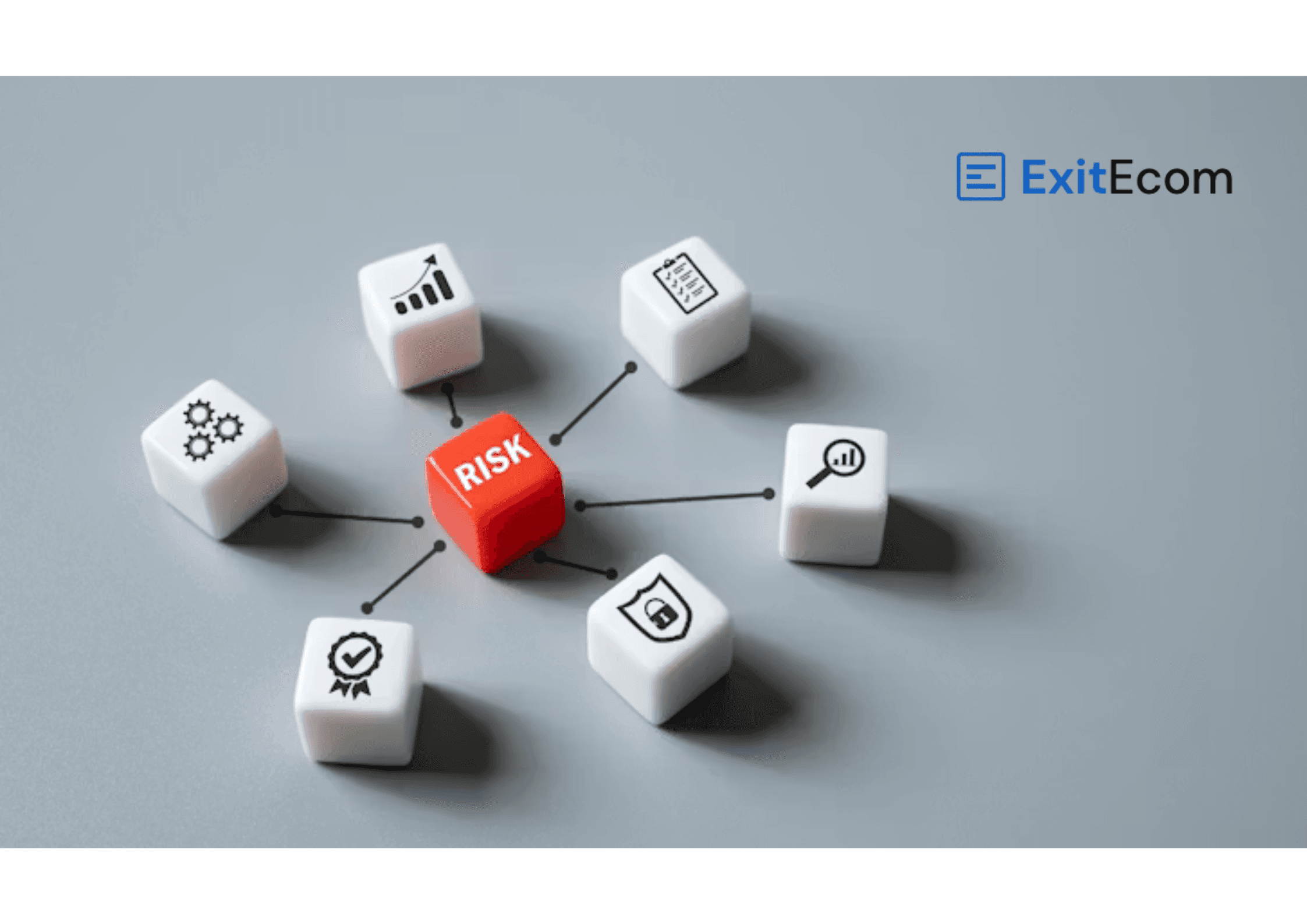
III. Diversify Revenue and Traffic Channels
Relying on a single traffic source or a single sales channel is a major "single point of failure" risk. If your business depends entirely on one Google ad campaign or one specific Amazon category, your revenue is inherently volatile. Algorithms change, and competition is constant; your strategy must reflect that reality.
Omnichannel Presence: Transition from a single-channel dependency to an omnichannel approach. If you operate primarily on a third-party marketplace, develop your own branded Shopify storefront. If your traffic is dominated by paid ads, invest in long-term organic search engine optimization (SEO) and email marketing.
Supplier Redundancy: Having only one source for your products leaves you vulnerable to production delays, quality issues, or supplier price hikes. Secure relationships with secondary or backup suppliers to ensure your ability to fulfill orders remains intact under any circumstances.
IV. Build Defensible Brand Equity
A business with strong brand equity is far more resilient than a commodity-driven storefront. Buyers are looking for assets that can grow over time, and a recognized brand provides the ultimate long-term protection.
Community over Transactions: Focus on building a loyal customer base rather than merely chasing one-time sales. Utilize retention strategies, such as subscription models, loyalty programs, and personalized email marketing, to demonstrate a consistent, recurring revenue stream.
Protect Your IP: Ensure that your intellectual property—trademarks, copyrights, and unique domain names—is properly registered and secured. Legal clarity regarding your assets creates a protective barrier that gives the buyer confidence in the business's long-term sustainability.
V. Address Security and Legal Vulnerabilities
In the modern digital landscape, security is non-negotiable. A data breach is a catastrophic event that can destroy both your brand’s reputation and the deal’s viability.
Cybersecurity Vigilance: Regularly conduct audits to identify vulnerabilities such as SQL injection or Cross-Site Scripting (XSS). Keep all third-party software, plugins, and security patches updated to the latest versions.
Regulatory Compliance: Ensure you are strictly compliant with data privacy regulations like GDPR or CCPA. Buyers will conduct a deep dive into how you collect, store, and utilize customer data; full compliance is a strong signal of professional integrity.
Ironclad Contracts: Review all agreements with employees, contractors, and suppliers. Ensure that all intellectual property developed for the business is legally owned by the business. Clean, enforceable contracts are vital to shielding the buyer from future litigation risk.
VI. The ExitEcom Advantage
Reducing risk is not just about correcting errors; it is about demonstrating the inherent value and stability of your enterprise. When you systematically remove friction, you invite competitive interest from high-quality buyers, which naturally drives your final valuation upward.
Pre-Sale Readiness Checklist:
Financials: 3 years of clean, transparent financial statements.
Operations: Full suite of SOPs for all core business functions.
Traffic: A diversified mix of at least two stable acquisition channels.
Tech: A secure, high-performance website with no technical debt.
Legal: All IP is protected, and contracts are formalized.
Preparing to sell is a major project that requires expert oversight. At ExitEcom, we help you navigate these critical steps to ensure that when you are ready to sell, you are handing over a well-oiled, low-risk machine. You have invested years into building your business—don't leave its final valuation to chance.
Are you ready to maximize your exit? Contact us today to initiate your business valuation and customized risk-mitigation audit.